50 PDF Box Templates: A Practical Design Toolkit
There is a specific kind of frustration that hits when you have a brilliant product idea but no way to physically realize it. You might have the perfect branding, the copy, and the marketing strategy, but if you can't create a professional physical container for your item, the customer experience falls flat. This is where the gap between digital design and physical manufacturing usually gets expensive. Hiring a structural designer to create custom dielines from scratch can cost hundreds of dollars per design. For small business owners, indie publishers, and crafters, that overhead is often impossible to justify.
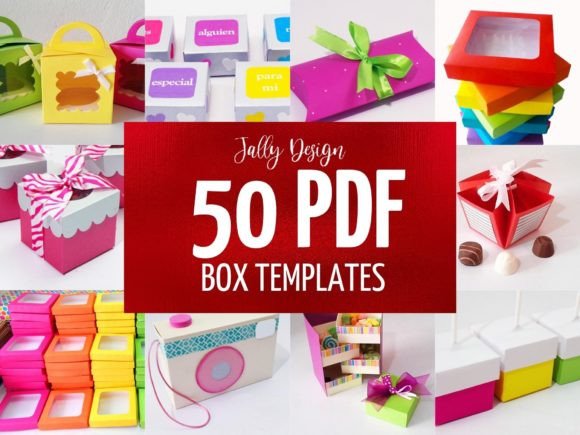
That is exactly the problem that PDF Box Templates Vol.1 Packaging Design was built to solve. It is not a font in the traditional typographic sense—there are no serifs or kerning pairs here. Instead, it is a comprehensive structural design asset. It functions as a library of 50 Box templates provided in a .pdf Format file. The appeal of this collection lies in its versatility and its ability to bridge the gap between your screen and the cutting table. Whether you are a graphic designer looking for structural bases for client mockups, a crafter using a Cricut or Silhouette machine, or a small business owner prototyping a new subscription box, this collection offers a standardized, reliable foundation.
The Anatomy of the Collection: Versatility and Structure
When you open the files, you will immediately notice the practical nature of the design. These are not decorative illustrations; they are functional engineering. The personality of PDF Box Templates Vol.1 Packaging Design is strictly utilitarian, yet visually clean. The lines are precise, the folds are marked clearly, and the cut lines are unambiguous. This clarity is essential because, as the product description notes, Decorations and embellishments are not included in this product. They are shown in photos only to complement the photos and demonstrate the potential of the raw structure.
This "blank canvas" approach is actually one of the product's greatest strengths. By stripping away the surface design, the templates allow for infinite customization. You are not locked into a specific aesthetic. Instead, you have access to a variety of geometries—from standard tuck-end boxes suitable for retail products to pillow boxes for party favors, and complex sleeve designs for premium gifts.
The visual characteristics are defined by utility. You won't find decorative swirls or embellishments cluttering the workspace. What you will find is a professional standard of structural integrity. The lines are vector-sharp, ensuring that whether you print them on an A4 sheet or scale them up for large format printing, the proportions remain mathematically perfect. This consistency is vital for packaging design, where a millimeter of error can result in a box that won't close.
Practical Applications for Designers and Makers
The true value of PDF Box Templates Vol.1 Packaging Design is realized in how it integrates into your existing workflow. For the graphic designer or brand strategist, these templates are invaluable for creating realistic mockups. Instead of presenting a client with a flat logo design, you can apply their branding to a 3D-rendered box structure. This elevates your brand identity presentations, showing the client exactly how their typography and color palette interact with the physical world.
For the crafter and hobbyist, the compatibility is seamless. The files are optimized for digital cutting machines. You can load the .pdf Format file into software like Cricut Design Space or Silhouette Studio. Because the files are clean, the software can easily trace the cut lines. This allows you to move from digital file to physical product in minutes. It removes the guesswork of measuring and cutting by hand, ensuring that every box you produce looks professional.
Small business owners and entrepreneurs will find this particularly useful for prototyping. Before committing to a large run of custom packaging from a manufacturer, you can print these templates on cardstock to test the size. Does your product fit? Is the unboxing experience intuitive? Does the structure feel sturdy enough? Testing these variables with a premium font of templates saves significant money and reduces waste in the product development cycle.
Structural Design and Brand Perception
In the world of modern typography and design, we often obsess over the typeface—the choice between a serif font, sans serif font, script font, or handwritten font. However, the structure of the container is just as critical to brand perception as the text on the label. A well-structured box communicates professionalism and care. Conversely, a flimsy or poorly cut box can make even a high-quality product feel cheap.
Using PDF Box Templates Vol.1 Packaging Design allows you to standardize your output. Consistency is key in branding. If you are selling handmade soaps or artisanal chocolates, your customers expect uniformity. Using these templates ensures that your packaging design is repeatable. This consistency builds trust. When a customer picks up your product, the structural integrity of the box—created using these precise dielines—subconsciously signals that your brand pays attention to details.
Furthermore, these templates influence visual hierarchy. The shape of the box dictates where the eye goes first. A pillow box has a natural focal point at the center curve, while a sleeve-style box draws the eye to the edge. Understanding these structural dynamics helps you place your logo design and key information exactly where it will have the most impact. It is a symbiotic relationship between the structural design assets and the graphic overlay.
Integrating Templates into Digital and Print Workflows
While physical crafting is a major use case, the utility extends into digital realms as well. For web design and social media graphics, these templates can be used to create digital representations of your products. By applying your textures and designs to the flat templates and then using mockup generators, you can create dynamic content for Instagram or your e-commerce site. This is a cost-effective alternative to professional photography for every single SKU you release.
For those in editorial design or publishing, smaller box templates can serve as inserts for magazines or special edition prints. Imagine a magazine subscription that includes a small, assembled gift box containing a sample product. The ability to generate these structures quickly allows for creative marketing tactics that were previously too labor-intensive to execute.
It is important to remember the note regarding the .pdf Format file. You must ensure your software is compatible. Most modern design suites—Adobe Acrobat, Illustrator, and even standard previewers—handle PDFs well. However, if you are using specialized cutting software, a quick compatibility check ensures a smooth process. Because the Decorations and embellishments are not included, you have the freedom to import these templates into Photoshop or Illustrator and layer your own textures, patterns, and typography on top. This makes it a highly flexible creative font of structural assets.
Choosing the Right Structure for Your Project
With 50 options available, selecting the right template requires some strategy. You need to evaluate the physical properties of your product. Is it heavy? Does it need a window? Is it fragile?
Consider these practical steps when working with PDF Box Templates Vol.1 Packaging Design:
- Evaluate Project Fit: Don't just pick the prettiest shape. Measure your product. If you are packaging a soap bar, a standard tuck end might work, but a sleeve might offer a better sensory experience. The templates provide the geometry; you provide the logic.
- Test Font Pairings: Once you have selected a box structure, test how your typography interacts with the folds. A script font might look elegant on a flat screen, but if it crosses a sharp fold line on a box, it might become illegible. Use the template to visualize where the creases will be and design around them.
- Review Included Styles: Browse the full collection of 50 before starting. You might find that a style you initially overlooked is actually perfect for a secondary product line or a seasonal promotion.
- Readability and Hierarchy: Treat the box panels like a webpage. The top flap is your "header," the front face is your "hero section," and the bottom is your "footer." Use sans serif fonts for legibility on smaller side panels, and reserve display fonts for the main face.
Ultimately, PDF Box Templates Vol.1 Packaging Design