Streamline Your KDP Publishing: 12 Professional Interior Templates
Creating a low-content book for Amazon KDP often starts with a burst of creative energy, but that enthusiasm can quickly hit a wall when you face the technical formatting. You need margins that work with KDP’s specifications, consistent line spacing, and bleed settings that won’t get your manuscript rejected. The KDP Interior Templates 12 Books 120 Page collection is designed to bridge that gap between your idea and a finished, upload-ready PDF. This bundle provides a robust foundation for publishers, entrepreneurs, and hobbyists who want to skip the tedious layout phase and focus on the content and marketing of their journals, notebooks, and planners.
Understanding the Utility of Pre-Formatted KDP Interiors
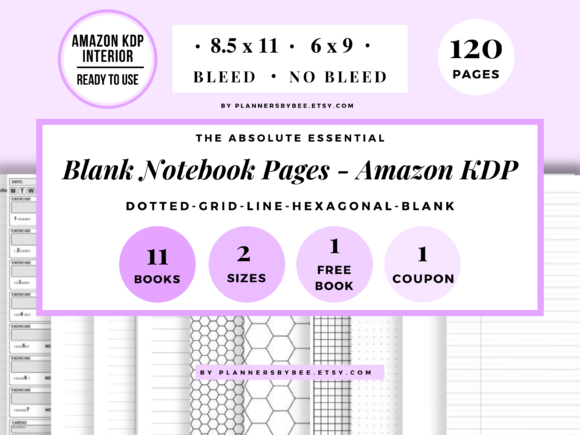
At its core, this collection is about efficiency and professional consistency. You receive 12 distinct completed templates, each set to a standard 120-page count. This specific page length is a strategic choice for low-content publishing; it strikes a balance between perceived value for the customer and manageable production costs for the creator. A 120-page notebook feels substantial in hand without being bulky, making it an ideal format for daily journals, fitness logs, or specialized diaries.
The visual personality of these templates is intentionally minimalist and functional. In the world of low-content book publishing, the interior design should serve the user, not distract them. These are not flashy display fonts or complex layouts; they are clean, structured grids designed for high usability. The appeal lies in the neutrality of the design—whether you are creating a cookbook, a gym fitness tracker, or a standard lined journal, the interior provides a blank canvas that adapts to your cover art and branding.
One of the most critical technical aspects of KDP publishing is the inclusion of bleed. This collection includes versions with both bleed and no bleed. "Bleed" refers to the ink extending beyond the trim edge of the paper, which is essential if you plan to have background colors or images that go right to the edge of the page. "No bleed" versions are optimized for standard white-page notebooks where the content sits safely within the margins. Having both options included saves you the headache of adjusting margins and ensures your files meet Amazon’s strict submission guidelines on the first try.
Standardized Sizing for Modern Publishing
The templates come in two of the most popular dimensions for the US market: 6" x 9" and 8.5" x 11". The 6x9 format is the classic "paperback" size, perfect for personal journals, diaries, and planners that readers might carry in a bag. It feels intimate and personal. Conversely, the 8.5x11 format is the standard letter size, which is the industry standard for workbooks, academic notebooks, and fitness logs where users need ample space to write or sketch.
By offering these sizes, the templates allow you to target different segments of the market without needing to learn the nuances of pagination for different trim sizes. You can focus on brand identity and cover design, knowing the interior mechanics are handled.
Practical Applications for Entrepreneurs and Creators
The versatility of these 12 templates allows them to function as essential design assets for a wide range of projects. For the small business owner or marketer, these interiors can be repurposed beyond standard KDP books. Imagine creating a branded notebook for a corporate retreat or a specialized planner for your coaching clients. The blank slate nature of these PDFs allows you to layer your own graphics, headers, or specialized prompts on top of the existing structure.
For graphic designers and content creators, this bundle acts as a rapid prototyping tool. If you are testing a niche—say, a gratitude journal or a password keeper—you don't need to spend hours in InDesign building the layout. You can use a KDP Interior Template to quickly assemble a proof of concept. This agility is crucial in the fast-paced world of digital publishing, where speed to market can determine the success of a niche book.
Furthermore, the consistency of the 120-page count helps in building a recognizable series. If you are a blogger or publisher looking to create a line of books, using standardized interiors ensures that your products feel cohesive on a virtual bookshelf. A fitness journal, a meal planner, and a daily diary can all share the same interior weight and quality, reinforcing your brand's professionalism.
Customization and Branding Potential
While the templates are "blank pages" in terms of pre-printed content, they are designed to be customized. Think of the lines and margins as the skeleton of your book. You have the creative freedom to add a title page, a copyright notice, and a table of contents without worrying about disrupting the underlying page flow.
This is where the concept of font pairing becomes relevant to your project. While the interior lines are neutral, any text you add—such as chapter headers or footer text—should complement your cover design. If your cover uses a bold modern typography style, you might choose a clean sans serif font for your interior headers to maintain readability. If your brand leans toward elegance, a subtle serif font can add a touch of class to the title pages. The templates provide the structure; you provide the personality.
Key Features for a Seamless Workflow
The primary value proposition of the KDP Interior Templates 12 Books 120 Page bundle is the removal of technical friction. Here is a breakdown of why these features matter for your workflow:
- Instant Download as PDF: You do not need specialized software like Adobe Illustrator to open these files. PDFs are universally accessible and are the exact file format required by Amazon KDP for interior uploads.
- Ready to Use: The layouts are finalized. You do not need to adjust line spacing, set gutters, or calculate the safe margin area. This is particularly helpful for crafters and hobbyists who may not be familiar with print layout standards.
- Versatility: The "blank page" specification is a strength, not a limitation. It allows these templates to serve as notebooks, diaries, graph paper, or planners depending on how you market them and what you place on the cover.
This approach aligns with E-E-A-T principles (Experience, Expertise, Authoritativeness, and Trustworthiness) because it allows you, the publisher, to focus on your area of expertise—whether that is fitness coaching, recipe curation, or creative writing—while relying on professional-grade assets for the technical execution.
Evaluating the Fit for Your Project
Before uploading to KDP, take a moment to evaluate how these templates fit your specific vision. If you are creating a digital journal for use on tablets like the iPad or Remarkable, the 8.5x11 PDF can often be imported directly into note-taking apps, though you may want to test the file size. For physical books, the 6x9 size is generally preferred for personal journals due to its ergonomic feel.
Consider the visual hierarchy of your final product. Since the interior is minimalist, your cover design and book description do the heavy lifting in terms of brand perception. A clean, professional interior reinforces the trust a customer places in your product. If a reader opens a journal and sees crooked lines or inconsistent margins, it cheapens the experience. These templates ensure that the readability and structural integrity of the book are top-notch.
Ultimately, the KDP Interior Templates 12 Books 120 Page collection is a foundational tool. It is not just about having a file to upload; it is about having a reliable framework that supports your creative endeavors. Whether you are launching your first low-content book or expanding an existing catalog of printable journals, these interiors provide the professional polish necessary to compete in the Amazon marketplace. They allow you to maintain consistency, save time, and deliver a high-quality product to your audience.