Unlocking Precision with Honeycomb Pin Lightburn Pins Templates
In the world of digital fabrication, the bridge between a creative vision and a physical object is often defined by the precision of your setup. Whether you are running a Glowforge Pro or a generic CO2 laser, the "honeycomb bed" is the unsung hero of your workspace. It supports your material, allows for airflow, and protects your machine. However, finding the exact focal points on that grid without measuring tools can be frustrating. This is where Honeycomb Pin Lightburn Pins Templates become an essential part of your toolkit. These are not just abstract design files; they are functional assets designed to solve a very specific logistical problem for makers, ensuring that your alignment is flawless every time you hit "Start."
Understanding the Functional Design of Honeycomb Pin Templates
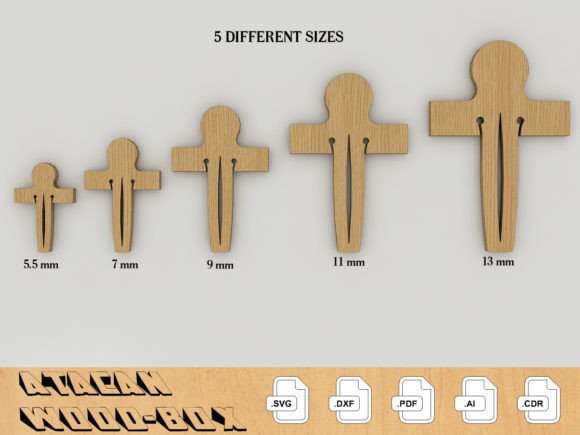
At their core, these templates are about utility, but they possess a distinct visual and structural personality. When you open the files, you will notice the geometric precision. The design is rooted in the hexagonal grid system that characterizes standard honeycomb laser beds. The "pins" are designed to be cut from scrap acrylic or plywood and inserted directly into the honeycomb holes. Visually, the templates are clean and utilitarian, lacking unnecessary ornamentation because their primary goal is mechanical fit. The style is industrial yet accessible, reflecting the modern maker movement where form follows function. The appeal lies in the repeatability they offer; once you cut a set of these pins using the Honeycomb Pin Lightburn Pins Templates, you create a reusable registration system that eliminates the guesswork of material placement.
The personality of this asset is one of reliability. Unlike decorative assets that change with trends, these templates are built for consistency. They are designed to fit the specific tolerances of the Glowforge and Lightburn ecosystems but are versatile enough for universal application. The visual characteristic is the interplay between the negative space of the material and the positive space of the pin, a testament to good vector design where line weight and node placement dictate success or failure.
Real-World Application: From Laser Cutting to Paper Crafting
The versatility of the Honeycomb Pin Lightburn Pins Templates extends far beyond the laser cutting community. Because these files are delivered in a comprehensive suite of formats—including SVG, DXF, PDF, AI, and CDR—they are compatible with a vast array of machines. For the laser user, the application is direct: you use the pins to jig your work. However, for those using paper cutting machines like the Cricut, Cameo, Silhouette, or even the Sizzix and Brother systems, these templates offer a different kind of value. They can serve as the foundation for complex paper engineering projects where registration marks are necessary, or simply as a guide for creating physical jigs for assembly.
Consider the entrepreneur or small business owner producing merchandise. Time is money. Every minute spent realigning a piece of wood or acrylic on the laser bed is a minute of lost production. By utilizing the Honeycomb Pin Lightburn Pins Templates, you standardize your workflow. You can create a "master jig" for specific product sizes—say, a set of coasters or earrings—allowing you to batch process orders without recalibrating between every run. For the crafter using a Gemini or similar die-cutting machine, these vector files can be adapted to create custom shims or guides that ensure paper cuts are perfectly centered. The practical guidance here is simple: treat these templates not just as cut files, but as manufacturing tools that increase your throughput.
Integrating Functional Assets into Your Brand Workflow
While "font" usually refers to typography, in the context of digital assets, we often look for typefaces and design elements that embody the same level of professionalism. The Honeycomb Pin Lightburn Pins Templates represent a modern approach to typography and design assets where the "font" is the mechanism of production. Just as a premium serif font lends authority to a novel, using precision templates lends authority to your physical products. When you hand a customer a product that has perfectly crisp edges and flawless alignment, that is a reflection of your brand identity. It signals that you care about the details.
For designers and marketers, the lesson here is about the ecosystem of design. We often focus heavily on web design, social media graphics, and editorial design, but the physical execution of a brand is equally vital. If you are selling laser-cut jewelry or custom signage, the consistency of your cut is part of your visual hierarchy. The Honeycomb Pin Lightburn Pins Templates help maintain that consistency. They ensure that whether you are cutting a vector file in Lightburn or printing a registration mark for a Cricut project, the alignment remains constant across different production runs. This consistency builds brand recognition.
Choosing the Right Format and Machine Compatibility
Evaluating the fit of these templates for your specific project is straightforward, thanks to the file variety provided. If you are a Glowforge user, the SVG and PDF files are your go-to, as they import seamlessly into the browser-based interface. For Lightburn users, the DXF and SVG files offer the most control, allowing you to manipulate the nodes if you need to adjust the pin size for a different honeycomb hole spacing. The inclusion of AI and CDR files ensures that Adobe Illustrator and CorelDRAW users can integrate these into their existing design workflows, treating the pins as a standard vector object that can be scaled or modified without losing quality.
When reviewing the included styles, remember that these are vector files. This means they are infinitely scalable. You can resize the pins to fit different machine beds or even use the vector paths to create oversized jigs for large-format printing or cutting machines. However, a key consideration is material thickness. The templates are designed to work with standard stock, but if you are cutting pins from very thin material, you may need to adjust the design to ensure a snug fit in the honeycomb holes. This is where the "readability" of the file comes into play—you need to be able to open the vector and understand the geometry to make those micro-adjustments.
Practical Recommendations for Maximizing Your Toolkit
To get the most out of the Honeycomb Pin Lightburn Pins Templates, think about them as part of a larger system of font pairing and design assets. Just as you would pair a script font with a sans serif font for contrast in a logo design, you should pair these templates with your specific production needs. Don't just cut one set of pins; create a library. Cut them in different colors to color-code your jigs for different products. For example, red pins for acrylic projects and blue pins for wood projects. This visual system helps you manage your workspace efficiently.
Furthermore, consider the commercial licensing aspect. If you are a small business owner, you are likely using these to create products for sale. These files are designed for that purpose. They are commercial assets intended to facilitate your production. By incorporating them into your daily workflow, you are not just buying a file; you are investing in a piece of infrastructure that supports your business growth. Whether you are a hobbyist looking to streamline your personal projects or a professional designer managing a client's packaging design production, the utility of precision alignment templates cannot be overstated. They are the silent partners in your creative process, ensuring that the final physical output matches the digital perfection you designed on screen.